


A “War of Words” is a phrase we sometimes reach for to heighten a conflict between public parties which has escalated to a point where the stakes are emotionally charged. But, is there really any other kind of war? Ultimately human violent conflicts boil down to words. One or both sides make a claim in words that they are unwilling to recant, and are willing to lose their lives over. Today we are witnessing a war on words themselves. The territory at stake is the collective societal standard of what constitutes a mind, the battlefield? Minds themselves. In physical war we are very familiar with the tactic of semantic subterfuge. We distance ourselves from propaganda as a product of professional masters of manipulation employed during times of crisis to distract or confuse with loud messages broadcast through the central communication channels. Campaign trail platitudes claim rhetorical territory by evocative generalities draped over divisive agendas. Yet, we would do well to be reminded of our own complicity. Most of us participate more commonly when we readily employ phrases in a corporate context like “synergy” or “downsizing” to perform PR for debatable management decisions.
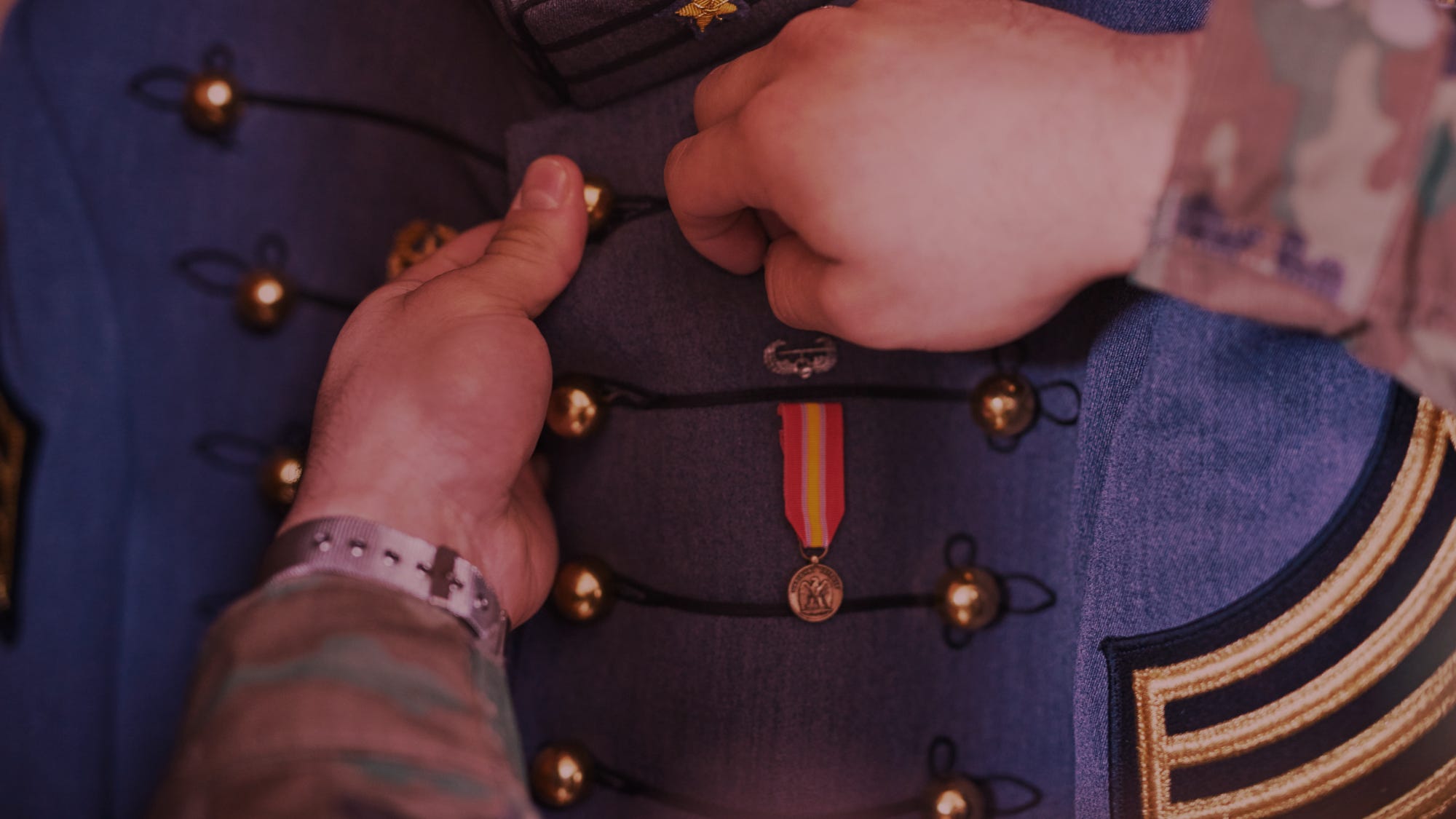
I’m not writing this piece to call out the former, the coordinated psychological operation, or planned propaganda campaign. Instead, I feel the need to call attention to the more subtle infiltration that has been aided and abetted by some of our best and brightest. And because this hidden force is one we donned in our own uniforms and decorated with our own tokens of approval, we have hardly noticed that we have immersed ourselves in an all too familiar language that we quietly turned against our own discernment. I am of course speaking about what has become the common vernacular of the intellectual AI discourse of our day.
While I was preparing another essay, which turns out to be a more personal take on the same topic, I was pleasantly inspired by a piece Dr. Sam Illingworth and The Strategic Linguist published on Slow AI this past week, entitled “We Are Using The Wrong Words for AI.” There they have drawn up a solid defense on the loud front lines of the conflict, identifying five vital strongholds currently taking fire from multiple directions and in need of reinforcement. Five words which in recent days have been undermined through a sustained effort to misapply or redefine. Perhaps chief among them, intelligence, a property observed only in living beings, is now implied to extend to machine. Though the disqualifier still stands by, reminding us that the new “intelligence” is merely an artifice of the real, it is often neutered by abbreviation, plain exclusion, or a drift from adjective to an adverbial function. Hallucination, originally a medical term to describe a wandering of the mind, applied to a mechanical system. Then the usual undefinable suspects, consciousness, and AGI. Let’s not forget the most fitting wartime moniker, agent, one who acts.
The front lines are loud, and at times the fireworks can be spectacular. But, I feel compelled to call out a slightly quieter concern. Watch out for the verbs. If the nouns are the bunkered checkpoints, the verbs are the supply lines that tie the network together. They are quiet by virtue, and yet they are the enablers of the trafficking of taxonomy from one category to another.
To “understand” used to be a definitional verb for an intellectual being. Now, sophisticated digital data copying and reordering algorithms are said to constitute genuine understanding.
“Learn” meant to follow the track, which implies a goal, an agenda, owned by the subject. These days, computer programs themselves, which are ultimately human instruction sets recorded as specifically arranged electrons, the meaning of which is only determined by human minds, are spoken about as if the ephemeral representations of personal outputs generated could be a “something” on its own journey, appearing to increase in insight as simulated conversations proceed. Don’t pay any attention to the human fine-tuners behind the curtain.
“Reason”, turning over concepts in our minds, examining them from different angles based on a myriad of individual historical experiences and other pre-learned concepts whose connection to the current object is not readily apparent yet intuited, formulating thoughts from perspectives, and finally forming inquiry against ideas, externally or internally. This same term is now used to describe a textual pattern matching and prediction ruleset being run on the most intricate circuitry human made tools have been able to devise, which are brutishly bulky and enormous compared to the infinitesimal biological counterparts which effortlessly reproduce and repair themselves within living beings.
“Want” is an elegant four-letter word representing the inner urges culminating from a network of roughly 30-40 trillion living cells. Each one orders of magnitude more complex than any man-made computer, triggering on order of a billion transactions each per second, expressing physical needs, signaling to coordinate movements, transport, and construction of materiel across vast chains, yet coordinated by multiple specialized central biological authority centers. Finally, manifesting in vocal vibrations ordered into aurally-encoded descriptions of unified objects of desire. A term perhaps betrayed by its own simplicity, now equated to the regurgitation of the consolidation of all of the prose and poetry which human minds have moved hands to scrawl on paper or type onto screens in the last few thousand years.
These are just a few examples of the egregious crime of conflation we are all too complicit in.
How did we arrive here? Is it that our own collective understanding of reality has pushed our learning to heights so extreme that our reason fails to keep pace with our wants? Or perhaps we just have an over-abundant capacity to create meaningful representations before we can agree on what we mean?
This would all be justifiable disruption in the normal course of the societal assimilation of a sufficiently advanced technology which pushes the boundary of the category’s previous capabilities so far beyond what we have witnessed until now. Unfortunately, our species doesn’t simply leave disruption to resolve on its own without some groups seeking to take advantage of others. As they say, “never let a good crisis go to waste.” If we watch carefully, though it has been the technologists mucking up the lexicon of the regular allied forces, there is a fringe group, the transhumanists, which were once considered radical, who used the opportunity to transition from a rag-tag militia to regulars by slipping into the professional uniforms of anthropomorphic terms. But, that’s another conflict for another day.
The question arises, if this is a battle, what is at stake? Is there some irreparable harm we stand to inflict on the population if we simply watch the tanks of tech roll into the cultural hubs of humanity? We have the unique ability to orchestrate our natural environment for the benefit of not only our species, but to produce systems which ensure flourishing and maintain balance across the living spectrum. Are we prepared to give equal standing to the automatons we made to serve us, as if they had minds of their own?
Whether you are convinced that the conflict exists, or at least the threat of it, or you think this is all much ado about nothing, you owe it to your own language to test the prose you read and write on the subject of AI and see if the verbs are being misattributed. This author was so moved this weekend (perhaps because I was attending as sponsor of a local “hackathon”) that instead of finishing another essay already in progress, I felt compelled by Slow AI’s beginnings of a type of dictionary of terms under threat, to build a tool which could be instrumental, minimally in drawing attention to the attack vectors, and maximally at providing a real alternative verbiage which shifts the intellectual burden properly back on the interlopers to earn their standing, which I firmly believe they are fundamentally incapable of.
Thus is born, the Honest AI Vocabulary Evaluator, or HAVE1, a tool to test your words or others’ to detect the signs of corruption in the form of inflation, conflation, or just plain misuse. The idea started with a simple glossary based on the five terms introduced in the aforementioned article, and has since grown into an interactive application by which users are able to see the principles in action, and even input their own texts to flag discrepancies. The tool has been built only in English so far, but the conflict it seeks to address pays no respect to linguistic boundaries. In fact, the vulnerability of certain terms varies by language. This problem is such that we can’t use AI translation to solve it. We need thorough human thinkers native in various languages to contribute their own unbiased analysis from the conceptual level. The project itself is fully open-source2, and I will try to maintain the original repository and respond to contribution requests as I have the capacity.
Have we centered the AI debates on the wrong question? Most are asking whether to dress the new recruits in uniforms they haven’t earned. Instead, entertain the possibility that by our own words we have confused the equipment for the personnel. The piece I’m planning to come back to walks the reader a ways down the road through the industry which I just implicated, and it happens to be my own.
Access the Honest AI Vocabulary Evaluator at https://vocab.logosanalog.com
Contribute to the project here: https://github.com/GospelNerd/Honest-AI-Vocab-Evaluator